
Orthodox Outlet for Dogmatic Enquiries Christian Dogmatics and About God


Lessons on Christian Dogmatics

Contents

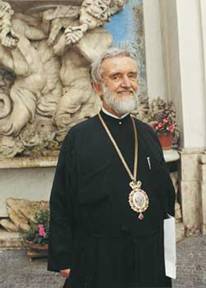
These are the notes that were taken from the lectures of Professor I. Zizioulas (current Metropolitan of Pergamus and Chairman of the Athens Academy) at the Poemantic Division of the Thessaloniki University’s School of Theology, during the academic year 1984-1985.

They are published with the blessing and the permission of the reverend Metropolitan.

The notes were published with the caring and the responsibility of the students, for use during their examinations.

Aristotelian University of Thessaloniki

Published by :  Publication Services

Because of its size, this series of Dogmatics will be presented by us in segments, in the hope that the entire text that we have in hand will be made available very soon.

It is with immense joy, that we are hosts to this significant piece of work in our website.

We consider this presentation an honor, and acknowledge the extremely significant opus of the reverend Metropolitan of Pergamus.


We are referring to the hand-typed notes of the reverend Metropolitan’s lessons at the University of Thessaloniki, which benefited us so much, that we wished to make them more broadly accessible.


It is our fervent desire that you study these notes, which exude the fragrance of the Orthodox faith and are delivered with scientific precision, in a simple and comprehensible manner.


We wish to thank with all our heart those who toiled and participated in the acquisition of these notes for us.


May the blessing of God and Father of our Lord Jesus Christ be with every person who seeks Him.

Professor Metropolitan of Pergamus and  Chairman of the Athens Academy I. Zizioulas

Contents

Á. ON DOGMATICS AND DOGMAS

1. Definition – Sources – Content and Method of Dogmatics:

a. Form and character of Dogmatics

b. Dogmatics as Hermeneutics (Interpretational)

c. The Dogmatics method


2. The term: «Dogma» and its significance

3. The affiliation of dogmas to the Holy Scriptures

4. The work of the Holy Spirit in the phrasing of the dogmas

5. The work of the Church in the phrasing of the dogmas

6. The prestige and the authority of the dogmas


Â. ON COGNIZANCE AND FAITH

I. On cognizance:

1. Cognizance of things

2. Cognizance of God

3. Cognizance through the Son and Logos 

4a. Cognizance «in persona»  part 1: The element of Freedom

4b. Cognizance «in persona»  part 2: The element of Love


II. On faith


C. ON GOD


1. The biblical premises


2. Basic principles of Patristic teaching:

a. Up to the Cappadocian Fathers

b. The contribution of the Cappadocians

c. Augustine’s views

d. Discerning between "Theology" and "Providence"

e. Existential interpretation


D. SUPPLEMENT


1. Discernments of the Cappadocians on the “being” of God:

a. The “whatever”, the “what” and the “how” of God

b. “Essence”, “energy” and “persona”

2. The transferal of the terms “essence”, Energy” and “Persona” into Theology (The problem of freedom)

a. The prerequisites of the Patristic Synthesis

b. The contribution of the Cappadocian Fathers – The patristic notion of the persona

c. Augustin’s theology and the problem of the Filioque

d. The theological problem of the Filioque

e. The Filioque in Theology and in Providence

f. The dogma of creation

   1. The problem of Gnosticism

   2. The correction of Platonic ideas by the Christian faith


Å. ON CREATION, SALVATION, CHRISTOLOGY AND ECCLESIOLOGY

1.  The dogma regarding Creation


2.  Creation from nil


3.  Existential consequences of the dogma on Creation


4.  The consequences of man’s downfall


5.  Christology


6.  Salvation


7.  Ecclesiology


F. ECCLESIOLOGICAL TOPICS

Introduction

Questions


1.  Orthodox Ecclesiology topics

A.     The eschatological identity of the Church


B.  Therapeutic or Liturgical”  Ecclesiology. The synthesis of Saint Maximus the Confessor

Questions


C. The Trinitarian basis of Ecclesiology


D.  Imagery in ontology

      Questions

          Å.  Formation and structure of the Church


           F.  The Local and worldwide Church – The Synodic institution


           G.  The functions of the Church

                 Questions


2.   Commentary on Western Ecclesiology


          Á.   The dialectics of “the one” and “the many”. The priority of a universal Church


          Â.    The problem of priority between Christology and Pneumatology (of the Spirit)

                  Ecclesiological consequences


          C.    History and Eschatology  

                 Questions

G. WESTERN THEOLOGY

Texts by Rev. John Zizioulas (Addendum)

(The Dogmatics – Theology – Filioque – Ecclesiology – Christology – Pneumatology of Western Theology)

1. Introductory, basic characteristics of Western thought

2. Theology and Providence in Western thought

3. The problem of the Filioque

4. The existential repercussions of the Filioque  

     Questions

Translation by A. N.

Webpage format: N. M.

Article published in English on: 4-7-2005.

Last update: 8-5-2007.

UP